Horse Drawn Carriage
Winter in Central Park
Home > New York State Photographs > New York > A horse drawn carriage in Central Park
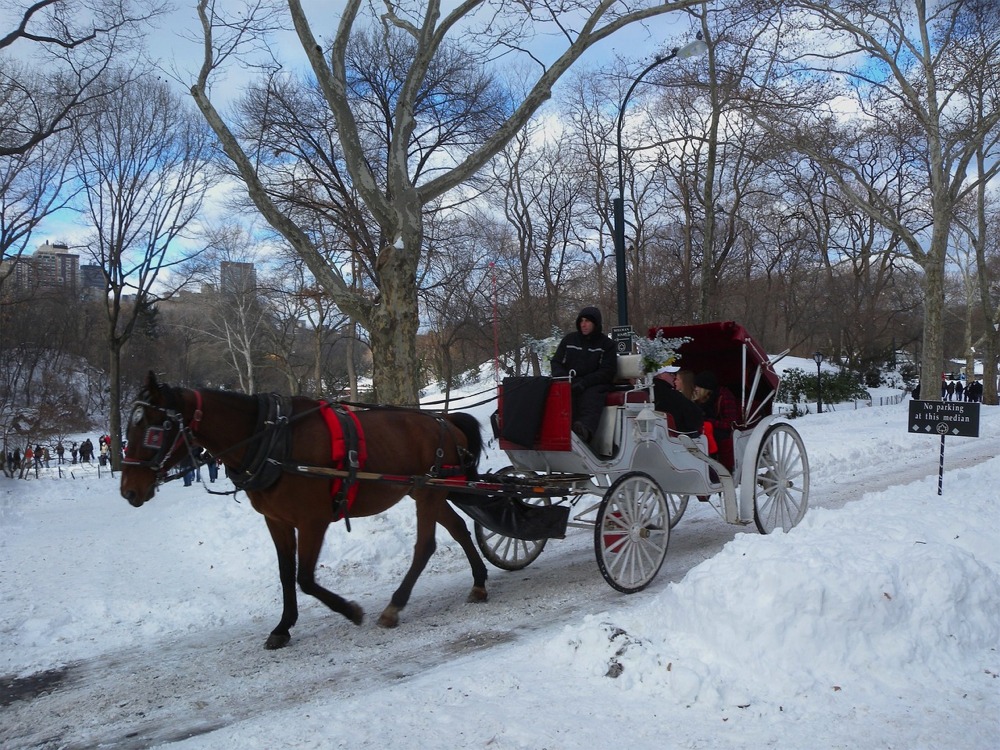
The chestnut mare pulled the white buggy through Central Park, her hooves clopping along the snow-covered path. The maroon canopy of the buggy had been pulled back, so the passengers could better appreciate the beauty of the scenery, which appeared almost like a painting, with the barren trees and the distant Manhattan skyline. Groups of people could be seen in the background, clustered together and enjoying the winter wonderland.
Inside the buggy, a young woman was speaking. Her cheeks were rosy from the cold and her eyes were bright, as if she had been entranced by something in the view. She had a rich, melodic voice that matched her warm laughter and her eyes sparkled as she spoke.
"It's so beautiful here," she whispered, her gaze locked upon the horizon, her words hanging in the air and evaporating with her exhaled breath. "I could just stay here forever."
Her sister beside her smiled and squeezed closer to share this wonderful moment. "Me too," she said simply, content just to be here and breathing in the crisp winter air. They stayed like this for a long time, until the chestnut mare had taken them as far as she could and it was time to leave. But for the family, the beauty of the moment was burned into memory, one that would last them a lifetime.
Horse-Drawn Carriages in Central Park
Horse-drawn carriages have a long-standing history in Central Park, New York City. They are a classic and nostalgic way for visitors to explore the park's scenic beauty and historical landmarks. Here's some information about them:
History
Horse-drawn carriages have been a fixture in Central Park since the mid-19th century. In the park's early years, horse-drawn carriages were a common mode of transportation for both New Yorkers and tourists. They were used for leisurely rides, transportation, and as a way to enjoy the park's picturesque landscapes.
Tourist Attractions
Central Park's horse-drawn carriages have become a popular attraction for tourists visiting New York City. The carriages offer a leisurely and romantic way to explore the park's vast expanses, iconic sites, and beautiful greenery. They typically follow designated routes that cover key points of interest within the park.
Routes and Sights
The carriage rides often take visitors through Central Park's most famous spots, including:
Central Park South
This is a popular starting point for carriage rides, located near prominent landmarks like The Plaza Hotel and the Deutsche Bank Center (also known as One Columbus Circle and formerly the Time Warner Center).
Grand Army Plaza
The carriage rides often pass by this plaza, which features the historic Pulitzer Fountain and the iconic General William Tecumseh Sherman Monument.
Bethesda Terrace and Fountain
Visitors can enjoy the view of the beautiful Bethesda Terrace and Fountain, which is one of Central Park's most famous architectural elements.
The Mall and Literary Walk
This area is known for its tree-lined walkway, flanked by statues of prominent literary figures like William Shakespeare and Robert Burns.
Conservatory Water
Carriage rides often pass by this picturesque pond where visitors can enjoy model boat sailing.
The Bow Bridge
This elegant cast-iron bridge is a popular location for its stunning views of the park and city skyline.
Controversies and Regulations
Despite their popularity, horse-drawn carriages in Central Park have also faced criticism over the years. Concerns have been raised about the well-being of the horses due to the noise, traffic, and weather conditions they are exposed to. Advocates for animal rights have pushed for stricter regulations and even outright bans on horse-drawn carriages.
To address these concerns, New York City has implemented regulations to ensure the welfare of the horses, including restrictions on working hours during extreme weather conditions and mandatory veterinary check-ups.
Conclusion
Horse-drawn carriages remain an iconic and charming way to experience Central Park's beauty and history. They offer a glimpse into the park's historical past and provide a unique perspective for tourists and visitors who want to enjoy a leisurely ride through one of the most famous urban parks in the world.